Author: admin

  • Why AI Can Sound Right and Still Be Wrong

    Imagine you are finishing a paper about social media, and you ask AI to finish everything and find credible sources for you. The sources it gives you look great, with authors, titles, and dates. Everything looks ready to paste into your reference list. Then you search for one of the articles it gives you, and nothing comes up.

    For college students, this is one of the most useful things to understand about generative AI: a convincing answer can still be wrong. This is also why I do not think students should let AI complete their assignments. When we submit something with our name on it, we should understand what it says and know where the information came from.

    A chatbot such as ChatGPT uses a large language model during training, these models process huge amounts of text. They learned patterns involving language and writing styles. As IBM explains, training includes making predictions and adjusting internal numerical settings when those predictions miss the target.

    The model works with small pieces of text called tokens. A token might be a word, part of a word, or punctuation. Google’s introduction to language models explains that language models estimate the probability of tokens based on context. When generating an answer, a model selects a next token, adds it to the text, and continues. A paragraph grows through this repeated process.

    Learning these patterns gives AI many useful abilities, However, It does not make every generated sentence a checked fact. A model can produce the familiar shape of a research citation without identifying a real paper behind it.

    This kind of error is often called a hallucination. IBM’s explanation of AI hallucinations includes invented studies, false facts, and nonexistent web addresses. The difficult part for readers is that these details looks great and reasonable .

    There is research showing this problem. In a 2023 study published in Scientific Reports, William H. Walters and Esther Isabelle Wilder examined 636 references from literature reviews generated by GPT-3.5 and GPT-4. They found that 55%of the GPT-3.5 references and 18% of the GPT-4 references were fabricated.

    To me, this is where the misinformation problem becomes personal. We usually talk about misinformation through elections, conspiracy theories, or viral videos. But it can also enter a classroom through an ordinary assignment. A student could trust a false claim, write it into their essay and pass it to other classmates.

    Another reason I would not let AI do an entire assignment is that I would miss the work behind the answer. Reading different sources helps me decide what I agree with and why. If I skip that part, I might submit an essay but still struggle to explain its main argument in class. This matters for creativity too. An essay gives students space to choose examples and develop their own opinions. If AI chooses the argument, evidence, and wording, there is very little left for the student to decide.

    Some AI systems today can retrieve outside information before answering. Google Cloud explains retrieval-augmented generation as a process that brings material from sources such as websites or databases into the model’s context. This gives the model relevant information to use while generating its response. It can improve accuracy, although the quality of the retrieved material still matters.

    But that does not mean we can stop checking. A link might open successfully, but the page still needs to support the claim in the essay. Before using a source, I would check its title, author, and date. Then I would find the section that supports my point.If I cannot find the source, I would remove the claim or look for evidence somewhere else.

    It might feel easier to ask AI to do all of this, especially when an assignment is due soon. But if I have to check every source and correct the argument afterward, the shortcut may create more work. Students should not hand over their assignments to AI and assume the results are trustworthy. We need to write our own arguments and check the content and references we use. A finished essay should show what we understand, and we should be able to explain the evidence behind it.
  • How Instagram and X Are Trying to Fight Misinformation

    Today, misinformation on social media has become way more harder to control. In the past, misinformation might looked like very fake or strange. It can be a short video, an edited photo or a real video posted with the wrong description, and platforms like Instagram and X can make information like this spread very quickly, so I wanted to look at what these two platforms are currently doing to fight misinformation.

    Instagram

    For many years, Meta worked with professional third-party fact-checking organizations. These organizations reviewed questionable posts, and Meta could add warning labels or reduce how many people saw false information.

    However, Meta made a major change in 2025. It ended its third party fact checking program and began replacing it with Community Notes. Starting in April 2025, Community Notes began appearing on Facebook and Instagram. Instead of professional fact-checkers deciding whether something needs more context, users can write notes and rate notes written by other people.

    Instagram also uses labels for AI generated content. Meta says it can add an “AI info” label when its systems detect signs that an image was created by AI or when a user says that AI was used. Meta can also use stronger labels when manipulated content has a high risk of misleading the public. Content can still be removed if it breaks other rules, such as rules about violence or harassment.

    I think AI labels are useful because AI images are becoming much more realistic. A person scrolling quickly through Instagram may only look at an image for a few seconds. So without a label, they may never stop and ask whether the image is real.

    However, I think this system has a problem. Community Notes depend on people noticing a misleading post, writing a note, and then other people can rate that note. All of this takes time, a post can receive thousands or even millions of views before a note appears.

    My suggestion would be to use both systems instead of choosing only one. Instagram could continue using Community Notes for normal posts, but professional fact-checkers could review posts that are spreading extremely fast or involve important public events. Instagram could also temporarily slow down the recommendation of a suspicious viral post while it is being reviewed.

    X

    X has used Community Notes longer than Instagram, and Meta’s system was partly inspired by X. On X, contributors can add notes to posts that may be misleading. Other contributors then rate whether those notes are helpful.

    One interesting part of the system is that X does not simply look for a majority vote. It tries to find agreement between contributors who have disagreed with each other in the past. I think this is a smart idea. If people with different viewpoints can agree that a note provides useful information, the note may be more trustworthy than one supported only by people who already agree with each other.

    Another feature that I think makes X different from Instagram is Ask Grok.

    Grok is X’s AI , users can tap the Grok icon on a post and ask Grok for more information about what they are seeing. Grok can give people analysis, or background information about a specific post. Grok can also search public posts and real time web information, which I actually think this can be very useful for misinformation. This is different from Community Notes because I do not have to wait for someone else to write a note, I can just ask for it by myself.

    However, Grok also creates a new problem.

    X’s own help page warns that Grok may sometimes give factually incorrect information, summarize something incorrectly, or miss important context. This is important because an AI fact checking another social media post does not automatically make the answer true.

    For this reason, I see Grok more as a research tool than a fact checker. If I see a questionable post, Grok can help me understand the topic and find more information. But I would still want to check reliable news organizations or original sources before deciding that something is true.

    But I think the biggest problem for X is also speed.

    A misleading post can receive thousands or millions of views very quickly. Even if Community Notes eventually adds the correct context, many people may already have seen the post.This is why I think X should connect Grok and Community Notes more closely.

    For example, when a post is spreading unusually fast and many users are asking Grok whether it is true, that could be a signal that the post needs faster review from the system. X could also show a simple message such as “More context is being reviewed.” This does not mean X has to say the post is false. It would simply remind users that there are questions about the information and that they may want to check other sources before reposting it.

    Which Approach Works Better?

    I do not think either Instagram or X has solved the misinformation problem. Community Notes have an important advantage because they allow regular people with different viewpoints to participate. They can also add context without automatically deleting someone’s post.

    I also like X’s Ask Grok feature because it gives users more control. Instead of waiting for the platform to tell me that something may be misleading, I can actively ask questions. However, these systems depend heavily on users. A person has to care enough to read the Community Note, click Ask Grok, or search for more information.

    The problem is that social media is designed to move quickly. Many people see something surprising and immediately share it, that can happen much faster than fact checking.

  • Did the Hollywood Sign Burn During the Los Angeles Wildfires?

    In January 2025, Los Angeles experienced several major wildfires. During the fires, I saw a claim online saying that the famous Hollywood Sign was on fire, and there were also a pictures and videos showing flames around the sign. Because the fires in Los Angeles were real and some of them were close to Hollywood, the claim looked possible at first.

    However, I was not sure if the images were real. The Hollywood Sign is one of the most famous landmarks in LA, so I thought that if it was actually burning, many major news outlets would be reporting it.

    Step 1: Stop and Look at the Claim

    The first step was to stop before believing or sharing the image. The picture was very dramatic, which was already a reason for me to be careful.

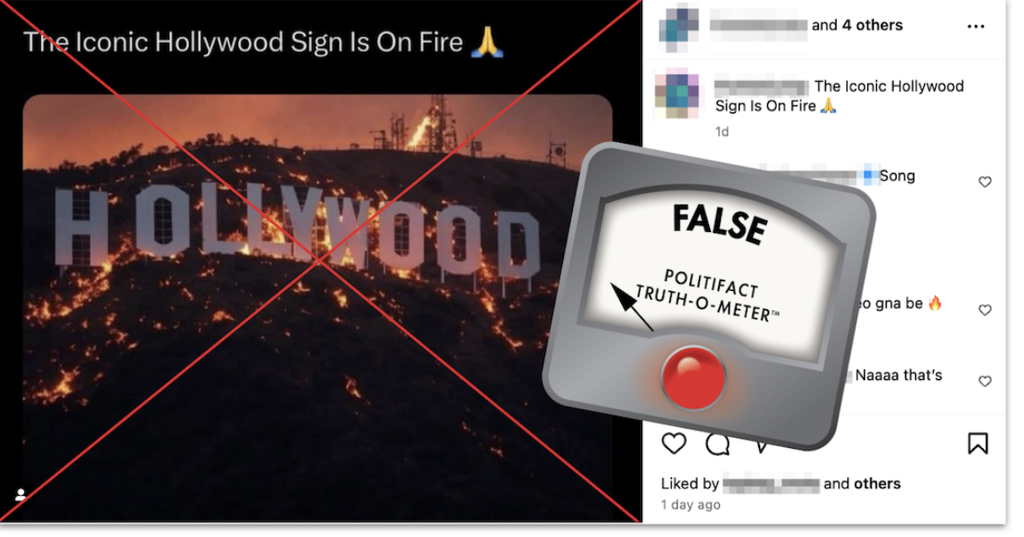
    PolitiFact reported that an Instagram post said, “The iconic Hollywood sign is on fire.” Similar images were also shared on Facebook and other social media platforms.

    At this point, I did not know if the claim was true or false. I only knew that I needed more information.

    PolitiFact: Hollywood Sign fact check

    Step 2: Search for Other News Reports

    Next, I left the original claim and searched for other news reports about the Hollywood Sign and the fires. Instead of only studying the original post, I checked what other sources were reporting.

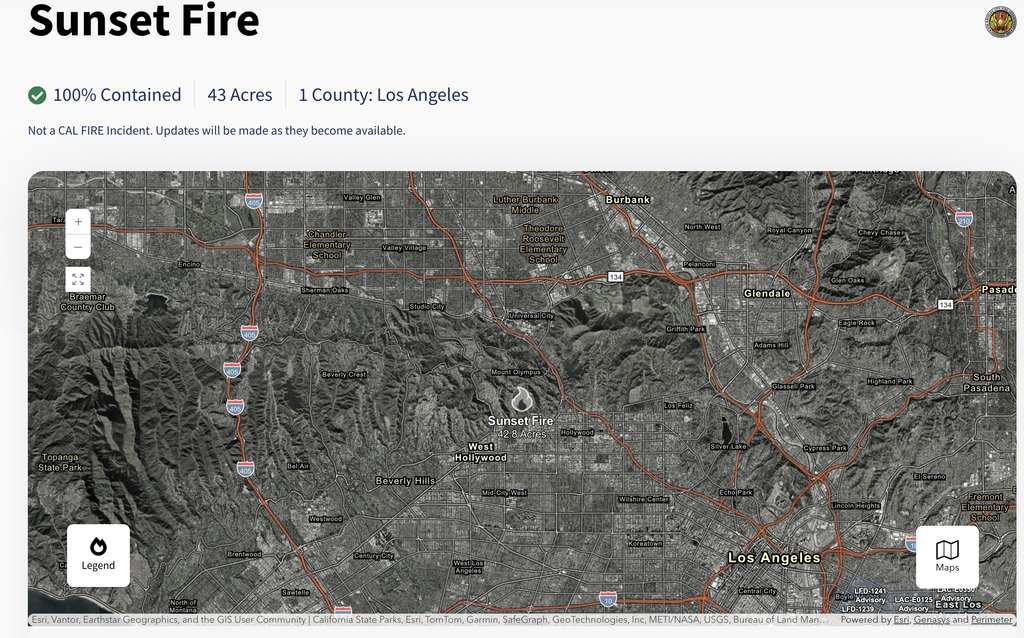
    I found that there really was a fire in the Hollywood Hills called the Sunset Fire. According to CAL FIRE, it started on January 8, 2025, and burned about 43 acres.

    This was important because the social media claim was connected to a real event. The fire was real, but that doesn’t mean the Hollywood Sign was burning.

    CAL FIRE: Sunset Fire

    Step 3: Check Local News

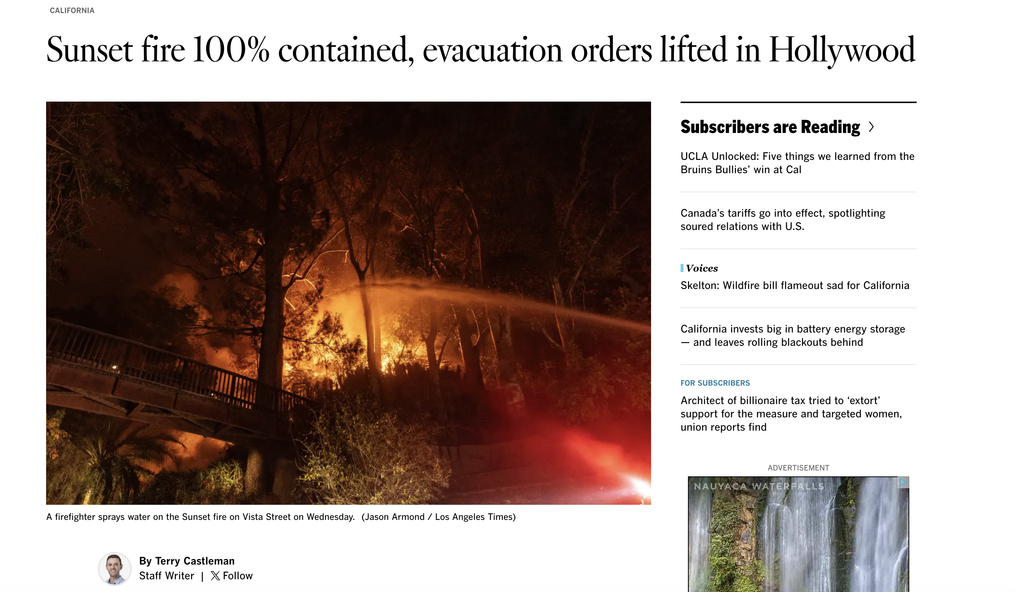
    Then I looked at local news coverage. The Los Angeles Times reported that firefighters reached 100% containment of the Sunset Fire on January 9. The fire caused evacuations in Hollywood and the Hollywood Hills, so it was definitely a serious situation.

    However, the Los Angeles Times did not report that the Hollywood Sign had burned. This was another red flag for the viral images. If such a famous landmark had actually caught fire, I would expect local news to report it clearly.

    Los Angeles Times: Sunset Fire coverage

    Step 4: Find a Fact-Check

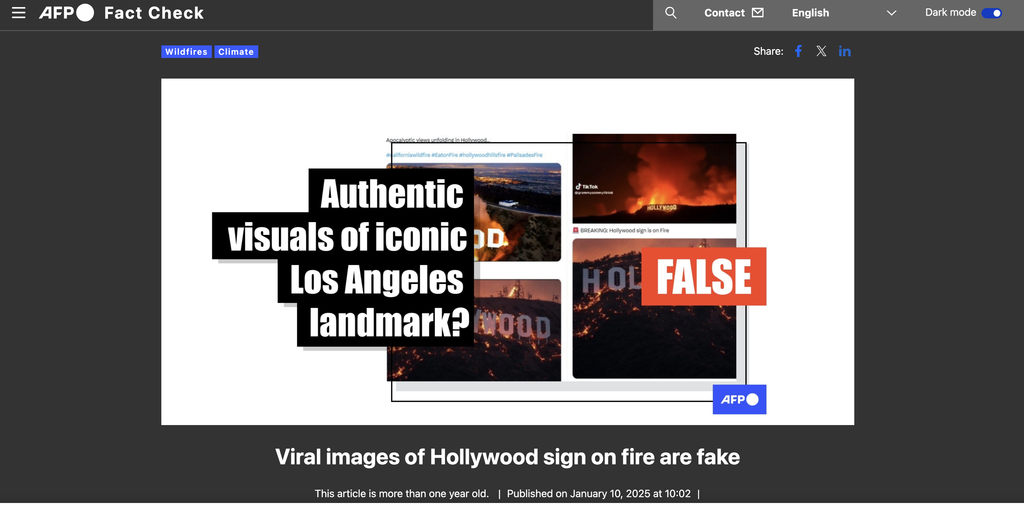
    Next, I found an AFP fact-check about the same images. AFP reported that the pictures and videos showing the Hollywood Sign surrounded by flames were fake, and also photographed the sign on January 9 and showed that it was still standing and had not burned.

    AFP Fact Check: Viral Hollywood Sign images are fake

    Step 5: Compare Different Sources

    Finally, I compared all of the information. CAL FIRE confirmed that the Sunset Fire was real. The Los Angeles Times confirmed that there was a dangerous fire in the Hollywood Hills. But AFP and PolitiFact both found that the images showing the Hollywood Sign burning were false. All those sourses helped me understand how misinformation can be difficult to recognize. The fake images were connected to a real disaster, which made them more believable.

    Conclusion

    My conclusion is that the claim that the Hollywood Sign burned during the January 2025 Los Angeles wildfires was false. The wildfires were real, and there really was a fire near Hollywood, but the viral images of the Hollywood Sign burning were fake.

    This example showed me why it is important to check information during breaking news. When something major is happening, real information and false information can spread at the same time. A picture can also look realistic even when it was created by AI. Instead of trusting one post, I think people should stop and check for more information, taking a few extra minutes to prevent sharing misinformation.

  • Evaluating misinformation education tools 

    RumorGuard

    RumorGuard is a website that uses real examples of rumors and misleading information that are spreading online. Instead of simply telling users that something is false, this website explains why it is false and how people can check similar claims in the future.

    For me, one of the most useful parts is the five factors of credibility: authenticity, source, evidence, context, and reasoning. For example, we can ask whether an image is authentic, whether a credible source confirmed the information, and whether the information is being used in the correct context.

    I think RumorGuard is effective because it teaches a process instead of just giving people the correct answer. This is important because misinformation affect us every day, especially when the AI technology is getting better and better every day.

    ” Bad News”

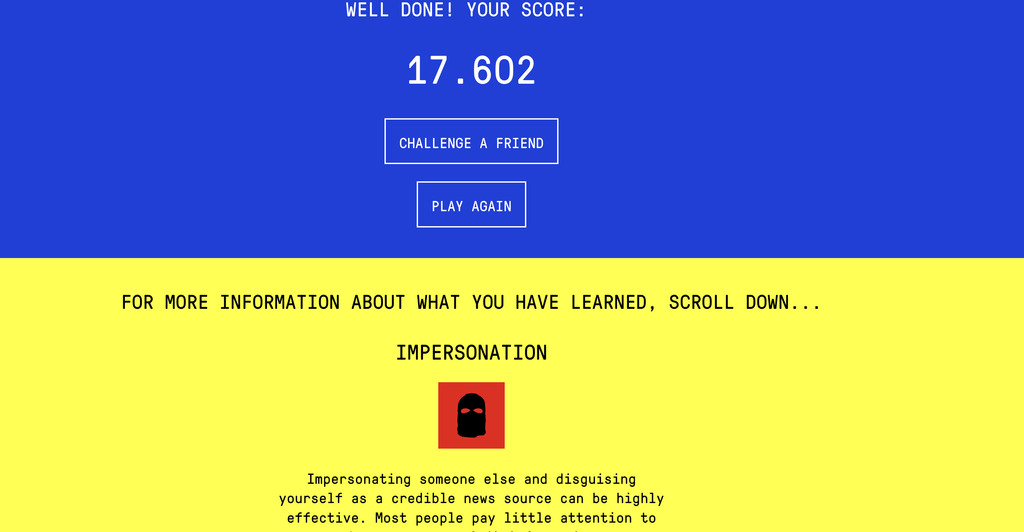
    I feel like Bad News Game is more like a game and I really like it. Instead of trying to identify misinformation, the player becomes a fake news producer. The goal is to gain more and more followers while keeping enough credibility. Players make choices that use common misinformation techniques, such as impersonation, emotional manipulation, polarization, conspiracy theories, discrediting opponents, and trolling.

    My final score was 17602

    A study from the University of Cambridge found that this game can improve people’s ability to recognize misinformation and increase their judgments before encountering them in real life. They are also more active than just reading an article or listening to a lecture, because players have to make decisions and see the results of those decisions.

  • My 24-Hour Media Diary

    8/23/2026

    10:10 a.m. – I woke up and the first thing I did was open TikTok and Instagram. I also replied to some messages from my friends.

    11:00 a.m. – I checked Outlook to see if I had any important work emails.

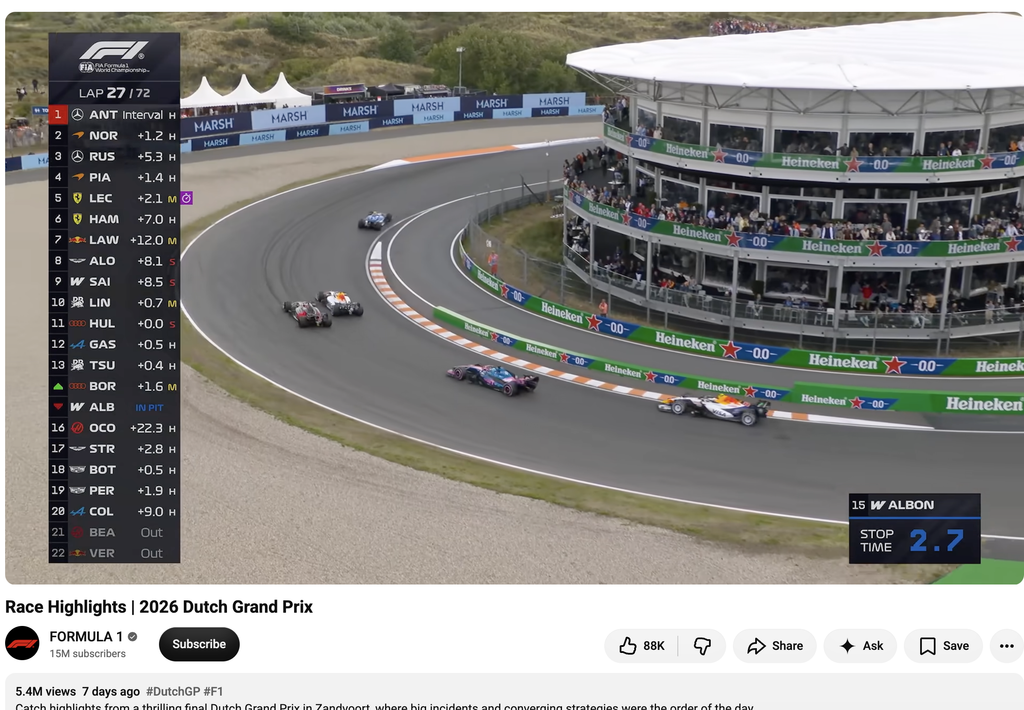
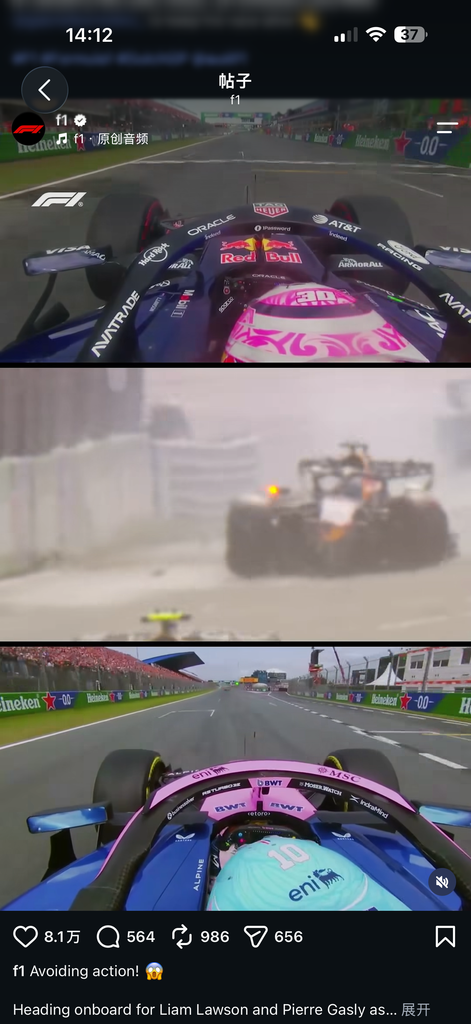
    12:00 p.m. – Lunchtime. I usually watch some YouTube videos while eating. That day I watched some replays from the F1 Dutch Grand Prix.

    12:20 p.m. – I opened Instagram and looked at a few posts about the race.

    2:30 p.m. – I opened X to see what was happening in the world. X is my main platform for news, I treat it like a place that I can find all the news outlets together. False information is very common on it, but I can reply to a post and tag It’s AI grok to check whether a claim is true, and I do that very often. One account I follow a lot is Mario Nawfal. That morning he posted that Trump had “managed to have Canada and Iran aligned against the U.S. at the same time“, and he thinks that Trump is destroying America’s standing on the world stage. The wording was sharp and one sided, so I did not take it as a fact but more like a strong opinion.

    2:45 p.m. – I went to TikTok for a longer break.

    3:00–4:00 p.m. – I returned to my laptop, logged into Canvas, and worked on that week’s assignments. After I finished, I checked my email again.

    4:30 p.m. – I logged into my PS5 and played games for a while.

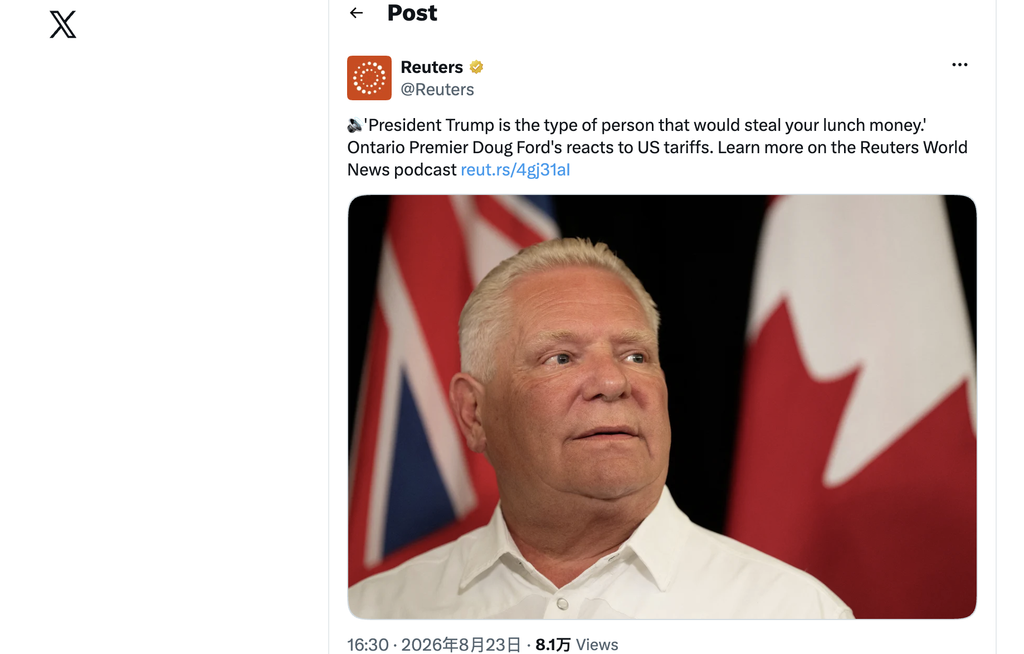
    6:20 p.m. – During dinner, X pushed me a Reuters post about U.S. tariffs on Canada. Ontario Premier Doug Ford said President Trump “is the type of person that would steal your lunch money.” I always pay attention to the tariff news because my job is relate to the international logistics and can be affect by the import costs and supply chain changes, so I wanted to know what was actually happening. The post was short and emotional, so I looked at other sources. Then I found out that talks between US and Canada had broken and a 50% tariff on many Canadian goods would effect from August 22.


    7:40 p.m. – I took my dog for a walk and listened to music on Spotify.

    After I wrote this diary down,I think it is clear that I fact the news very often. A large part of the posts come from the same kind of accounts, a person who post all day, use strong words and mix a real headline with their own conclusion. Mario Nawfal is one example, I follow him because he is fast, but he also frames stories in a very sure way. That is why I have to check him all the time. It is not that I think every X post is all fake, It’s just because their tone makes me questionable.

    I also noticed a pattern. When a news sounds shocking or is something that can affect me, I will definitely go check it on different sources and share to my friends if I think I have to . However, If it’s a game replay or a funny video, I would just watch it. So I’m actually not fact checking everything, I only check the posts that sound urgent, political. And I think Tagging Grok on X really helps, it’s a great way to help people to avoid false information.